After the Handsome Monkey King got his name, he thanked Master Puti enthusiastically. The patriarch ordered the disciples to take Wukong to the inner courtyard and teach him to sweep and the proper manners to use among the disciples. Obediently, they went out. Outside, Wukong paid respects to his senpais,1 and they found a placeContinue reading “Journey to the West – Chapter 2.1”
Author Archives: mengshagong
Journey to the West – Chapter 1.3
While he was looking around, he suddenly heard a voice coming from deep in the woods. He hurried through the woods toward the sound and found a person singing. “Watching chess, the axe handle rots.1 Thwack, thwack, I’m chopping wood. I walk through valleys at the edge of clouds and trade my wood for wine.Continue reading “Journey to the West – Chapter 1.3”
Journey to the West – Chapter 1.2
*As usual, translation notes are in the mouseover text or at the bottom of the post. 🙂 Let’s continue the story! The monkey multitude cheered upon hearing this.1 They said “Lead us inside! We’ll follow you.” The stone monkey closed his eyes,2 crouched, and jumped in once more, calling “Follow me!”3 The braver of theContinue reading “Journey to the West – Chapter 1.2”
Journey to the West – Chapter 1.1
First, a note on retelling Journey to the West. As a part of this, I wanted to share with you some of the decisions I made during translation, but I don’t want to distract from the story, so I’ve inserted them footnotes with mouseover text. There are these decisions almost everywhere. (For touchscreen viewers, clickingContinue reading “Journey to the West – Chapter 1.1”
A note on retelling Journey to the West, and translations in general.
It feels like this should go without saying, but I am not a professional translator. Please don’t take my translations as authoritative in any way. I’m using translating these texts as a way to learn the language, and taking you along on this journey. The nuances of one language just cannot be fully represented inContinue reading “A note on retelling Journey to the West, and translations in general.”
Journey to the West – a beginning?
Journey to the West is my childhood. My first memory of it was probably this 1963 Chinese cartoon – 大闹天宫 – a movie adaptation of one of the first major episodes in Journey to the West1. Growing up, I read abridged children’s versions in Chinese manhua, watched the 1999 cartoon religiously2, studied a simplified versionContinue reading “Journey to the West – a beginning?”
Piano no Mori – Numbers are Weird
Looking up the etymology for this page, I got really distracted by 一 and 二. These two kanji (meaning 1 and 2) are two of the simplest characters that exist and, along with 三 (3), some of the first kanji/characters that you learn1. However, numbers are one of the most complicated and confusing things I’ve tried to learn in Japanese. Each number has multiple pronunciations, and thus far to me, it’s not always clear which one to go with.
Alphabet Animals
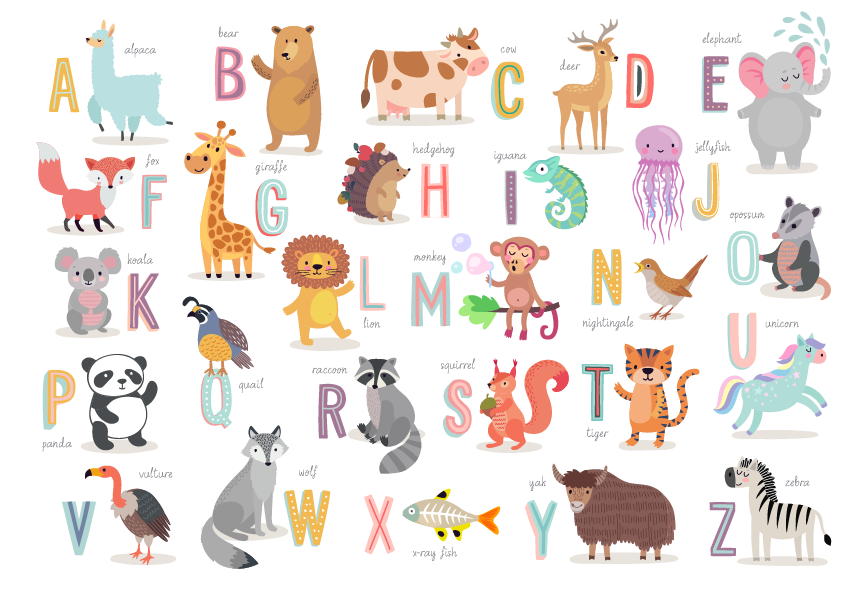
When a culture encounters something new in a new place, such as during colonization, war, or mass migration, words tend to be borrowed quickly and wholesale so people can communicate new concepts. Animal words are a great example of this. Guess which of the following animal names you think are native to English. I’ve listed below the explanations for ones that are not.
Piano no Mori – Made-up Ceremonies
本物(honmono) means “the real deal.” 本(jap: hon, chi: ben3) means “origin” or “source”. The character is a tree – 木 – with a line through the base to highlight the root, or “source” of the tree. The word for Japan – 日本(jap: nihon, chi: ri4ben3) – is “the source of the sun”.
Piano no Mori – The Absence of Order
仲間(nakama) means “comrade”, or “one of us”. We’ve talked about 間(jap: ma, chi: jian1) previously – it refers to the space between things. It’s worth noting that it’s pronounced differently here than in 人間(ningen). 仲(jap: naka, chi: zhong4) is an obsolete character in Chinese now, but it can still be understood through its parts 人 – person and 中 – middle. This phrase literally means “among us”.
 Etymology Adventures